Walk into most offices today and you will notice something different from what offices looked like five years ago. The rows of identical desks, the fixed working hours, the expectation that everyone is present in the same building from nine to five, the paper-heavy processes, the rigid hierarchy that determined who could speak to whom about what. Most of that is either gone or dramatically changed in the organisations that are attracting the best people and producing the best results.
The workplace is undergoing one of its most significant transformations in decades. The changes that began accelerating during and after the pandemic years have not stopped. If anything they have deepened, spread into more sectors and more types of organisations, and started producing real differences in how work gets done, where it gets done, who does it, and what a good working environment actually looks like.
2026 is a particularly interesting moment to assess where things stand. The experiments have had time to produce results. The companies that rushed into new approaches without thinking them through have had to reconsider. The companies that resisted change have faced consequences in terms of talent, productivity, and culture. And the clearer patterns of what actually works are emerging from the noise of trend pieces and predictions.
This blog is going to walk through the most significant workplace trends shaping offices in 2026 in honest, practical terms. Not the ones that sound impressive in conference presentations but the ones that are actually changing how millions of people work every day. What they are, why they have taken hold, what they mean for employees and employers, and where they are heading.
The Hybrid Work Model Has Become the New Normal
If there was one trend that reshaped offices more than any other over the past few years, it was the shift to hybrid working. And in 2026, hybrid is no longer an experiment or a temporary accommodation. For a large and growing proportion of knowledge workers, it is simply how work works.
Hybrid working means a combination of time in a physical office and time working from home or another remote location. The specific balance varies enormously between organisations and even between roles within the same organisation. Some companies have settled on two days in the office and three remote. Others have moved to flexible arrangements where individuals choose their office days based on what they are working on. A smaller number have maintained expectations closer to full office attendance but with more flexibility than existed before.
What has become clear after several years of real-world implementation is that hybrid working works well when it is designed thoughtfully and works poorly when it is implemented as a compromise that nobody is fully committed to. The organisations that have made hybrid work genuinely successful have not simply allowed people to work from home on some days. They have redesigned how collaboration happens, how information flows, how performance is evaluated, and how the office space itself is used to support the kinds of work that benefit most from in-person interaction.
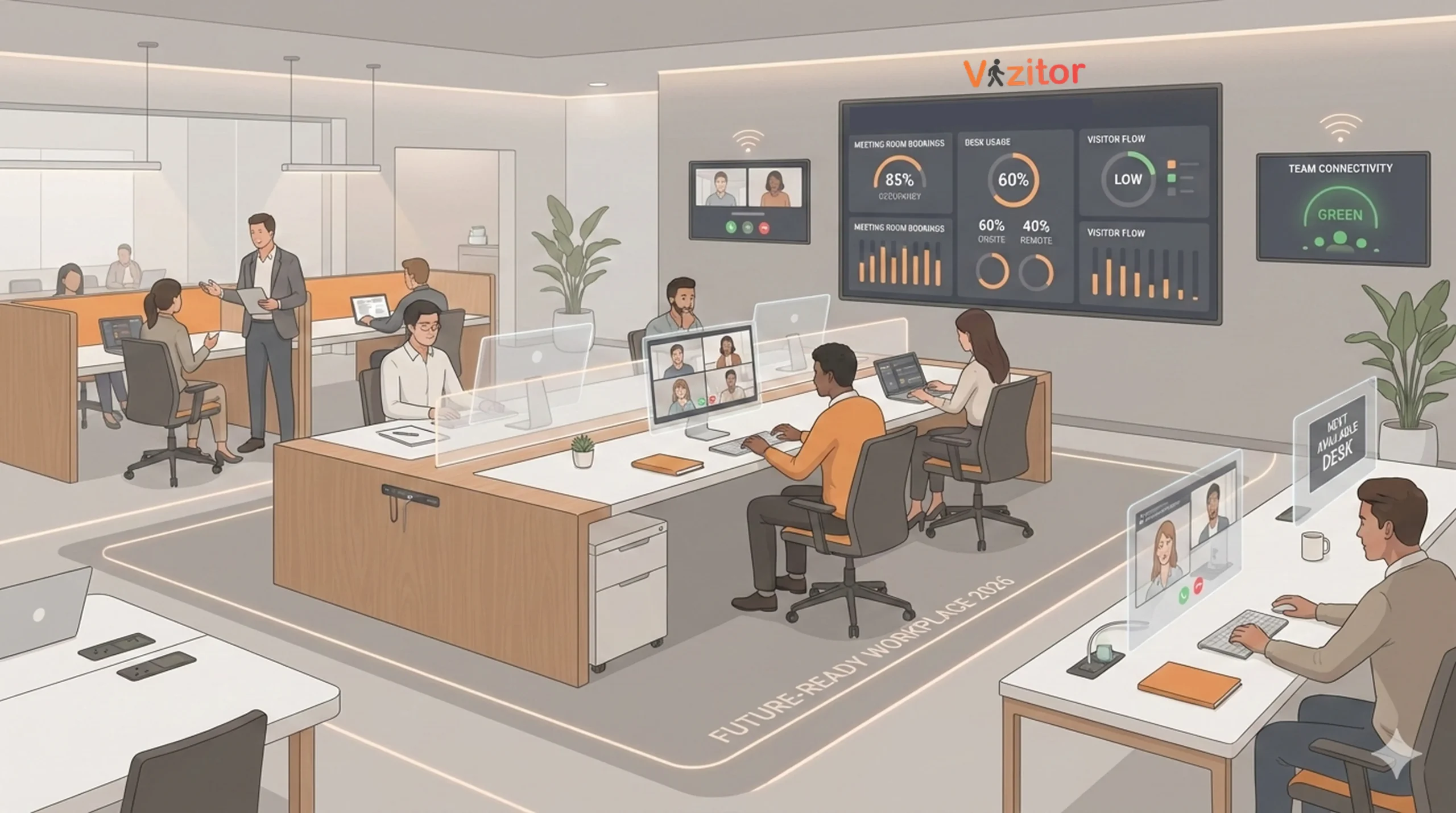
The office itself has changed in response to hybrid working. The traditional desk-per-person layout that assumed every employee would be present every day has given way to activity-based working environments where different spaces are designed for different types of work. Focus zones for individual concentrated work, collaboration spaces for team meetings and creative sessions, social spaces for the informal interaction that builds relationships and culture, and quiet booths for video calls are all features of offices that have been reimagined for a hybrid workforce.
Hotdesking, which was initially unpopular when first introduced, has matured in its implementation. Booking systems that allow people to reserve specific desks or spaces before coming in have replaced the frustrating scramble for available workspace. Better technology in shared spaces, including monitors, keyboard connections, and proper desk setups, has made hotdesking more comfortable and more practical.
The challenge that hybrid working continues to face in 2026 is equity. Employees who come into the office more frequently tend to have more visibility with their managers and more informal access to decision-making conversations than those who work remotely most of the time. Organisations that have not actively addressed this proximity bias are seeing it affect promotion rates and career development in ways that disadvantage remote-heavy workers and create tension about the fairness of hybrid arrangements.
Artificial Intelligence Has Moved From Promise to Daily Reality
A few years ago, discussions about artificial intelligence in the workplace were largely speculative. Now they are operational. In 2026, AI tools are embedded in the daily working lives of employees across a very wide range of roles and industries, and the organisations that have integrated AI effectively are seeing real productivity differences.
The most visible AI integration in office work involves AI assistants that help with writing, summarising information, generating first drafts of documents, analysing data, preparing meeting notes, and managing routine communication. These tools have matured from impressive demonstrations to genuinely useful work aids that save time on tasks that previously consumed significant proportions of knowledge workers’ days.
The impact on how work is structured has been meaningful. Tasks that previously required a junior team member to spend several hours on have been compressed to minutes with AI assistance. This has forced organisations to rethink what they expect from employees at different levels and what skills are genuinely valued. Generating a basic report, creating a first draft of a proposal, or compiling research from multiple sources are all things AI can now assist with so effectively that the human value in those activities is shifting toward judgment, refinement, and strategic application rather than the execution itself.
AI is also changing how performance is tracked and how decisions are made about people and processes. People analytics, which uses data about how work is happening to identify patterns, inefficiencies, and risks, has become significantly more sophisticated. While this creates genuine opportunities for managers to make better-informed decisions, it also raises real questions about privacy, consent, and the appropriate limits of monitoring in the workplace that organisations are still working through.
The skills that matter most in an AI-assisted workplace are shifting. The ability to work effectively with AI tools, to prompt them well, to evaluate their outputs critically, and to apply human judgment to the results they produce is now a genuine professional competency across many roles. Employees who resist engaging with AI tools are increasingly finding themselves at a disadvantage relative to those who embrace them as genuinely useful work aids.
Employee Wellbeing Has Become a Business Priority Not a HR Checkbox
For a long time, employee wellbeing was something organisations said they cared about while their actual practices and cultures communicated the opposite. The combination of post-pandemic awareness of mental health, high-profile burnout among knowledge workers, and the very visible impact of poor wellbeing on retention and productivity has changed this in many organisations.
In 2026, the most progressive workplaces treat employee wellbeing as a genuine business priority with real investment and real accountability rather than a HR initiative that produces an annual survey and a yoga class. The difference between organisations that are doing this genuinely and those that are performing it is increasingly visible and is one of the factors that most strongly influences whether high-quality people choose to join or stay.
The components of genuine wellbeing investment in leading organisations include mental health support that goes beyond an employee assistance programme phone number. On-site counselling access, manager training in recognising and responding to mental health challenges, normalising conversations about stress and pressure within teams, and actively monitoring workload to prevent chronic overload are all things organisations that take wellbeing seriously have implemented.
Flexibility has emerged as one of the most powerful wellbeing investments available to organisations. The ability to manage your own time, to attend to personal needs without elaborate justification, and to design your working day in ways that suit your individual energy and circumstances is something employees value enormously and that directly impacts their wellbeing. Organisations that provide genuine flexibility, rather than nominal flexibility that comes with implicit expectations against using it, consistently show better wellbeing outcomes.
Physical workspace design is another wellbeing dimension that has received more serious attention. Natural light, proper air quality, ergonomic furniture, spaces for movement and rest, access to outdoor areas, and reduction of the sensory stress of open-plan offices through better acoustic design are all features of workplaces that take physical wellbeing seriously. These are not luxuries. There is strong evidence connecting workspace quality to productivity, health, and engagement.
The Skills-Based Organisation Is Replacing the Job-Based One
One of the more fundamental shifts happening in how organisations are structured and how they think about their people is the move toward skills-based approaches to work and talent management.
In a traditional job-based organisation, structure is built around fixed roles with defined responsibilities. People are hired to fill those roles and their career development is measured by moving between them. In a skills-based organisation, work is organised around capabilities rather than fixed positions. Projects and tasks are matched to the people with the relevant skills regardless of what their formal job title says. Career development is measured by skill development rather than by title progression.
The practical implications of this shift are significant. Skills-based organisations are more fluid and can deploy people more flexibly in response to changing priorities. They tend to be better at retaining people because they offer clearer development pathways that are visible and measurable. They also tend to be better at identifying internal talent for new opportunities because they have a clearer picture of what capabilities exist across their workforce.
The technology enabling this shift has matured. Skills mapping platforms that help organisations understand the skills profile of their workforce, identify gaps, and match capabilities to opportunities have moved from early adoption to mainstream use among forward-thinking employers. These platforms also support learning recommendations, helping employees understand which skills are growing in demand in their organisation and suggesting relevant development resources.
For employees, the skills-based shift creates both opportunity and responsibility. Opportunity because your value to an organisation is increasingly about demonstrable capabilities rather than tenure, title, or educational credentials alone. Responsibility because staying relevant requires active, ongoing attention to skill development rather than assuming that experience accumulates into long-term security.
Diversity, Equity, and Inclusion Have Moved From Aspiration to Accountability
Diversity, equity, and inclusion have been discussed in workplaces for years but in 2026 the organisations that are serious about them have moved from aspiration to accountability. The difference is measurable goals, transparent reporting, and consequences for leaders who do not make progress.
The understanding of what DEI actually requires has also deepened beyond representation statistics. Representation, having diverse people in the organisation, is a starting point but it is not sufficient on its own. Equity, ensuring that people have access to the support, opportunities, and conditions they need to succeed regardless of their background, and inclusion, ensuring that diverse people actually feel valued, heard, and able to contribute fully, are equally important and significantly harder to achieve.
Psychological safety has emerged as a central concept in inclusion discussions. A workplace where people from underrepresented backgrounds feel safe to speak up, challenge decisions, and be themselves without fear of being penalised for it is an inclusive workplace. Building this safety requires consistent behaviour from leaders and a culture that explicitly values diverse perspectives rather than defaulting to the dominant group’s comfort.
Pay equity has received significantly more attention in leading organisations. Conducting pay equity audits to identify and correct gender and ethnicity-based pay gaps, and being transparent about pay ranges and promotion criteria, are practices that have moved from the leading edge to expectations in organisations that want to attract diverse talent.
The Office Is Being Redesigned for Purpose Not Presence
The question that office design is increasingly being asked to answer in 2026 is not how many people can fit in this space but what purpose does coming into this space serve. This is a fundamentally different starting point and it is producing very different kinds of office environments.
When presence was the primary measure of work, offices were optimised for density. Fit as many people as possible into the available space at the lowest cost per seat. Privacy was an afterthought. Noise was an accepted cost of the density required. Individual preferences were largely irrelevant because the expectation of attendance was non-negotiable.
When purpose is the primary question, offices are designed around the activities that genuinely benefit from in-person co-location. Collaboration on complex problems, creative ideation, onboarding new employees, relationship building, mentoring, and cultural transmission are all things that happen better in person than remotely. Individual focused work and routine communication can happen effectively anywhere. The purpose-designed office dedicates its space to the former and does not try to replicate conditions suited to the latter.
The most thoughtful office redesigns happening in 2026 include extensive consultation with employees about how they actually use space and what they need from it. The results often surprise leaders who assumed they knew what their people needed. Quiet focus spaces are consistently among the most requested features. Good quality food and social spaces that make the office feel worth coming to are increasingly recognised as genuine factors in voluntary attendance.
Technology infrastructure in offices has been significantly upgraded to support seamless hybrid participation. Meeting rooms designed so that remote participants have a genuinely equivalent experience to those physically present, rather than being a small rectangle in the corner of a screen, are a visible example of taking hybrid equity seriously in physical space design.
Four Day Work Week Experiments Are Producing Real Evidence
The four-day work week has moved from theoretical conversation to real-world experimentation at a scale that is now producing meaningful evidence. Several large-scale trials across different countries and industries have reported results that challenge the assumption that output is directly proportional to hours worked.
The headline findings from the most rigorous trials are that organisations implementing a four-day week without reducing pay have generally maintained or improved productivity, reduced employee burnout and sick leave, improved retention, and strengthened their recruitment attractiveness. Employees report better wellbeing, more time for personal priorities, and in many cases higher focus and energy during the four working days.
The implementation details matter enormously. Organisations that have simply compressed five days of work into four without changing how work is done have seen stress increase rather than decrease. The trials that have worked best have used the transition to examine and eliminate time-wasting activities, unnecessary meetings, and inefficient processes that were previously accepted because time felt more available.
In 2026, the four-day week is not yet mainstream but it has moved from radical to credible in a way that was not true three years ago. A growing number of organisations across technology, professional services, and creative industries have made the shift and are competing on it as an employer value proposition.
Learning and Development Has Been Transformed
How organisations develop their people has changed significantly and the change is continuing to accelerate. The once-a-year mandatory training module and the occasional external conference have given way to much more personalised, continuous, and practically integrated approaches to learning.
Microlearning, which delivers short, focused learning content that can be consumed in minutes rather than hours, has proved more effective than long formal training programmes for many types of skill development. The ability to access a relevant explanation, demonstration, or practice activity at the moment you need it rather than weeks before or after the relevant work is genuinely different and genuinely more effective for skill retention.
Mentoring and coaching have received more investment and more structured attention in leading organisations. Formal mentoring programmes that connect junior employees with more experienced colleagues, and executive coaching that supports senior leaders in developing their effectiveness, are increasingly seen as core development investments rather than perks for the select few.
Learning in the flow of work, which means building development opportunities into the actual work people are doing rather than taking them away from work to learn, is the direction that the most progressive organisations are moving. Project-based learning, stretch assignments, peer learning communities, and the structured reflection on experience that turns doing into learning are all expressions of this approach.
Conclusion
The workplace trends shaping offices in 2026 are not temporary adjustments to unusual circumstances. They represent genuine, lasting changes in how organisations think about work, about their people, and about what good leadership looks like in a world where talent has more choice, information is more abundant, and the nature of knowledge work itself is being transformed by technology.
The hybrid model has proven its durability and its challenges. The organisations navigating it best are those that have genuinely redesigned their approaches rather than simply grafting remote flexibility onto unchanged structures and cultures. Artificial intelligence has moved from a future possibility to a present reality that is reshaping what skills matter and how work gets done at every level. Wellbeing has graduated from a stated priority to an actual investment in many of the organisations doing best at attracting and retaining talent.
Skills-based organisations are emerging as a more flexible and more human approach to deploying and developing people than the rigid job-based structures they are replacing. Diversity and inclusion have matured from aspiration to accountability in organisations serious about both ethics and performance. Office design has pivoted from optimising presence to enabling purpose. Four-day work weeks are producing evidence that challenges long-held assumptions about the relationship between hours and output. And learning and development have been transformed from periodic formal events to continuous, integrated parts of daily working life.
For employees navigating this landscape, the most important thing is to stay engaged with the changes rather than waiting for things to settle back into familiar patterns. The patterns that were familiar are not coming back. What is emerging in their place offers genuine opportunities for people who are willing to adapt, to develop new skills, to work in new ways, and to advocate for working conditions that support their wellbeing and their growth.
For organisations, the lesson that 2026 is delivering is that the companies attracting the best people and producing the best results are not the ones defending the most traditional arrangements. They are the ones that are genuinely willing to redesign how they work in response to evidence about what works, what people need, and where the world is heading.
The future of work is not waiting to be decided. It is being decided right now, in thousands of individual organisations, by the choices leaders and employees make every day about how they show up, what they expect from each other, and what kind of working environment they are willing to build and to demand.
Pay attention to the trends. But more importantly, pay attention to what they mean for your specific situation and what they ask of you. The workplace of 2026 rewards people and organisations that are honest, adaptable, and genuinely committed to doing work well. That combination has always been valuable. In the current environment, it is essential.